
About
Fishing techniques are methods for catching fish
Fishing techniques refer to the various methods used to catch fish from rivers, lakes, seas, and oceans. These techniques have evolved from traditional practices to modern, technology-driven systems, ensuring efficient harvesting while maintaining ecological balance. The selection of a fishing technique depends on factors such as the type of fish, water body, season, and scale of operation.
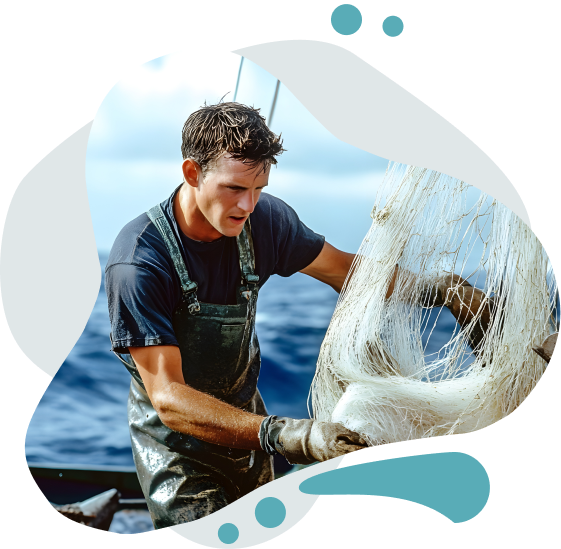
One of the most commonly used techniques is net fishing, which involves the use of different types of nets such as gill nets, cast nets, seine nets, and trawl nets. This method is widely adopted in commercial fishing due to its ability to catch fish in large quantities. Net fishing is suitable for both freshwater and marine environments.
Line fishing is another important technique that uses baited hooks attached to a line. This method includes hand lines, longlines, and rod-and-reel systems. Line fishing is considered environmentally friendly as it allows selective catching and reduces damage to non-target species.
Trap fishing involves the use of specially designed cages or traps that allow fish to enter but prevent them from escaping. This technique is commonly used for capturing fish, crabs, and lobsters. It is an eco-friendly method as fish can often be released alive if required.
Trolling is a method in which baited lines or artificial lures are dragged behind a moving boat. This technique is mainly used in deep-sea fishing to catch fast-moving species such as tuna and mackerel.
Spearfishing is a traditional method where fish are caught using spears or harpoons. It is practiced in shallow, clear waters and requires skill and precision. Although effective, it is limited to small-scale operations.
In recent times, aquaculture or fish farming has emerged as a sustainable fishing technique. It involves breeding, rearing, and harvesting fish under controlled conditions. Aquaculture helps meet the growing demand for seafood while reducing pressure on natural fish populations.
Overall, modern fishing techniques emphasize sustainability, efficiency, and environmental protection. Responsible fishing practices ensure the long-term availability of aquatic resources and support the livelihoods of fishing communities.